




















A management consultancy in Dubai dominates Google rankings for their service keywords. Page one positions. Consistent traffic. Then ChatGPT search launched. When potential clients asked ChatGPT for management consulting recommendations in UAE, the company never appeared.
Their content was optimized for 2015 SEO tactics. Keyword-stuffed blog posts. Thin service pages. No structured expertise signals. Google’s algorithm still rewarded this. ChatGPT’s model ignored it completely.
The search landscape is fragmenting. Traditional search engine optimization still matters, but AI-powered search engines evaluate content fundamentally differently. Businesses relying exclusively on conventional SEO tactics are becoming invisible to a growing segment of search traffic. At CzoneStar, we are seeing UAE companies scramble to understand why their previously successful content strategies suddenly underperform in AI search contexts.
ChatGPT search, Perplexity, Google’s AI Overviews, and similar tools represent a shift from keyword matching to understanding actual meaning and authority. The optimization strategies that worked for a decade become obsolete when AI models decide what content to surface.
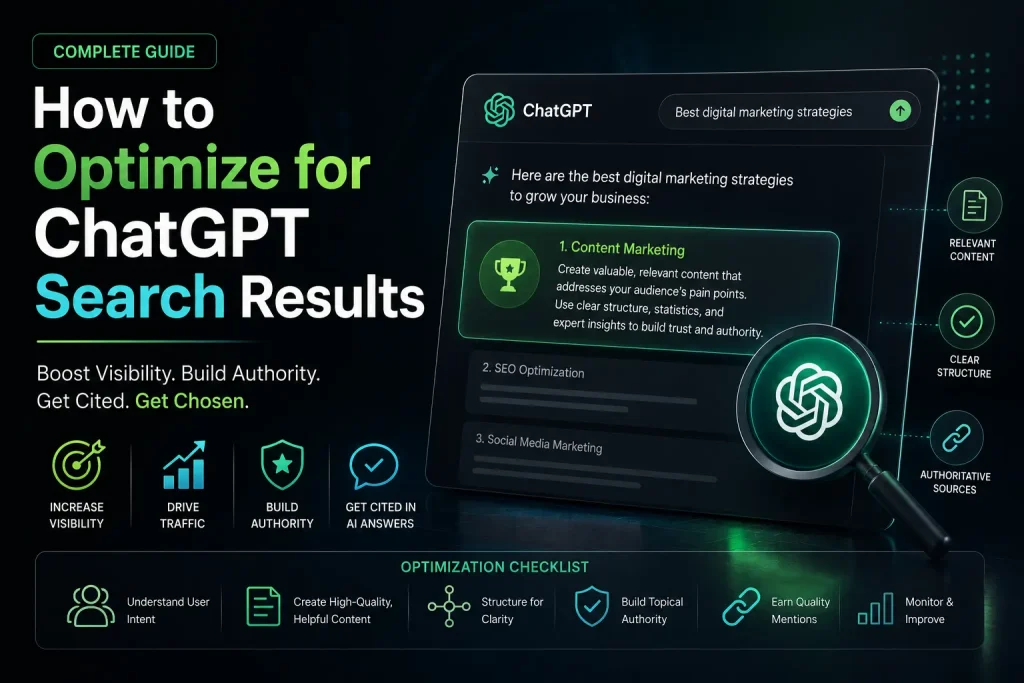
How AI Search Fundamentally Differs from Traditional SEO
Google search shows ten blue links. Users click, evaluate, and decide. ChatGPT search synthesizes information and provides direct answers. The user never visits your website unless the AI determines you are the authoritative source worth citing.
This changes optimization completely. Traditional SEO optimizes for click-through from search results pages. AI search optimization aims to become the source the AI references when answering questions.
A legal firm in Abu Dhabi ranks first on Google for “corporate law UAE.” Their website gets traffic. But when someone asks ChatGPT about corporate law procedures in UAE, a different firm gets cited. Why? That firm’s content provides clearer, more comprehensive answers in formats AI models can parse and synthesize easily.
AI models evaluate topical authority differently than search algorithms. Google measures authority partly through backlinks. ChatGPT evaluates content depth, accuracy, structure, and how well it answers specific questions. A website with few backlinks but exceptional content depth can become the preferred AI source.
The zero-click problem intensifies with AI search. Google already shows answers directly for many queries. ChatGPT goes further by synthesizing multi-source answers without sending traffic anywhere. Optimization now focuses on being cited as a source rather than receiving clicks.
Context understanding matters more than keywords. A training provider optimized pages for “leadership training Dubai.” Generic keyword placement. When ChatGPT receives questions about developing leadership skills in UAE corporate environments, it pulls from sources demonstrating actual expertise through comprehensive, contextual content, not keyword density.
Content Structure AI Models Prefer
AI models parse content differently than human readers. Structure matters enormously for machine comprehension.
Clear, hierarchical headings help AI understand content organization. A cybersecurity company restructured their blog posts with descriptive H2 and H3 headings. ChatGPT started citing them regularly because the structure made their expertise obvious to the model.
Answer-first formats work better than traditional narrative structures. Humans tolerate preambles. AI models want direct answers. A healthcare clinic restructured service pages to lead with clear definitions and explanations before supporting details. Their citation rate in AI search responses increased because the model could extract key information immediately.
Comprehensive coverage beats superficial content. A single 2,000-word piece covering a topic thoroughly outperforms ten 200-word posts touching surface-level points. AI models prefer depth. A financial advisory firm consolidated scattered blog posts into comprehensive guides. ChatGPT references increased dramatically.
Factual accuracy without fluff matters critically. Marketing hyperbole and vague claims reduce AI trust signals. An ecommerce platform removed promotional language from educational content and focused on specific, verifiable information. Their content became preferred source material for product category questions.
Lists and structured formats improve parseability. Steps, processes, comparisons, and categorized information help AI models extract and synthesize content. A logistics company reformatted shipping guides into numbered steps and comparison tables. Visibility in AI-generated answers improved measurably.
Authority Signals Language Models Recognize
AI models try to determine content authority before deciding whether to reference it. The signals differ from traditional SEO factors.
Author credentials matter when detectable. Bylines with relevant expertise, author bios establishing credentials, and consistent authorship on topic-specific content all signal authority. A medical practice added detailed doctor credentials to health articles. ChatGPT started preferring their content over anonymous sources.
Updated publication dates indicate current information. AI models show preference for recent content when recency matters. A technology consulting firm implemented clear publication and update dates. Their content gets cited more frequently for evolving tech topics.
Citations and references within your content demonstrate research depth. Linking to authoritative sources and citing data builds trust signals. A market research company started properly citing data sources in reports. AI models treat their insights as more credible.
Expertise demonstration through specific examples and case studies outweighs generic claims. An HR consultancy replaced vague statements about “improving workplace culture” with specific methodologies and measurable outcomes from actual clients. ChatGPT recognizes this as genuine expertise rather than marketing copy.
Consistency across content establishes topical authority. Publishing deeply on related topics signals expertise in that domain. A sustainable architecture firm focused content creation exclusively on green building rather than general architecture. They became the go-to source AI models cite for sustainable design questions.
Structured Data: Making Content Machine-Readable
Structured data has always helped search engines. For AI models, it becomes critical for understanding content context and relationships.
Schema markup tells AI models exactly what your content represents. An events company implemented Event schema. ChatGPT now accurately references their events when users ask about upcoming Dubai business conferences.
FAQ schema makes question-answer pairs explicit. A technical support company marked up their help documentation with FAQ schema. When users ask ChatGPT technical questions, their answers appear as cited sources because the structure is perfectly clear.
Article schema helps AI understand content type, author, publish date, and topic. A business news site implemented comprehensive Article schema. Their content gets referenced significantly more in AI-generated news summaries.
Product schema for ecommerce makes specifications, pricing, and availability machine-readable. An electronics retailer properly structured product data. ChatGPT references their inventory when users ask about specific product availability in UAE.
LocalBusiness schema helps AI understand geographic relevance. A restaurant group implemented location-specific structured data. When people ask ChatGPT about dining options in specific Dubai neighborhoods, they get cited.
Organization schema establishes entity relationships. A holding company with multiple subsidiaries structured organizational relationships clearly. AI models now understand their business structure and cite appropriate entities accurately.
Natural Language Optimization Over Keyword Manipulation
AI models understand language semantically. Keyword stuffing not only fails but actively hurts credibility.
Conversational content that answers questions naturally performs better. A legal consultancy rewrote service pages as if responding to client questions. “What are the steps to form a company in Dubai?” instead of “Company formation services Dubai.” ChatGPT cites them more because the content matches how people actually ask questions.
Topic coverage depth matters more than keyword density. Writing comprehensively about subjects rather than repeating target phrases signals expertise. A digital marketing agency stopped keyword-optimizing blog posts and started writing genuinely useful guides. AI search visibility improved because content quality increased.
Natural synonyms and related concepts strengthen topical relevance. Using varied terminology demonstrates comprehensive understanding. A medical device supplier writes about “diagnostic equipment,” “medical imaging tools,” and “healthcare technology” naturally within content. AI models recognize broader topical authority.
Context over keywords determines relevance. A business insurance broker answers specific scenario questions rather than repeating “business insurance UAE.” When ChatGPT receives contextual queries about insurance needs, comprehensive scenario coverage makes them the cited authority.
User intent matching beats keyword matching. Understanding why someone asks a question and addressing underlying concerns creates better AI search alignment. An immigration consultancy restructured content around actual client concerns rather than search volume keywords. Citation frequency increased because intent alignment improved.
Creating Citation-Worthy Content
Being cited by AI search requires content that deserves reference as an authoritative source.
Original research and data become citation magnets. A recruitment agency publishes quarterly salary surveys for UAE markets. ChatGPT cites them as the definitive source for compensation data because they provide original information unavailable elsewhere.
Expert perspectives rather than aggregated information create value. An industry analyst shares specific market insights based on direct experience. AI models prefer citing identified experts over content that simply compiles existing public information.
Detailed how-to guides with specific steps become reference material. A software training company creates comprehensive tutorials with screenshots and explanations. When users ask ChatGPT how to perform specific tasks, these guides get cited because they provide complete answers.
Case studies demonstrating real outcomes build credibility. A sustainability consultant publishes detailed case studies with measurable results. AI models reference these when answering questions about sustainability ROI because concrete examples strengthen responses.
Comparative analysis providing multiple perspectives helps AI synthesize balanced answers. A business software reviewer compares platforms objectively with specific criteria. ChatGPT cites them when users ask about software selection because the comparative format fits AI answer structures.
Technical Elements AI Crawlers Prioritize
AI search systems still need to discover and parse your content. Technical optimization remains foundational.
Clean HTML structure helps machine parsing. Semantic HTML5 tags, proper heading hierarchy, and well-formed markup make content easier for AI systems to understand. A publishing company cleaned up messy WordPress templates. Content indexing and citation improved.
Fast load times ensure crawlability. AI crawlers have resource limits. Slow sites get crawled less frequently or less deeply. A portfolio website optimized images and code. Their newer content appears in ChatGPT responses faster because crawl frequency increased.
Mobile optimization matters as AI systems evaluate user experience signals. A service directory implemented proper responsive design. Mobile-first indexing applies to AI crawlers too.
XML sitemaps help AI discovery. Clearly structured sitemaps with priority indicators guide crawl focus. A large ecommerce site improved sitemap structure. Their product information appears more current in AI responses.
Robots.txt configuration ensures important content remains accessible. Accidentally blocking AI crawlers prevents indexing completely. A SaaS company discovered they had blocked AI user agents. Fixing this immediately improved their AI search visibility.
Security and SSL certificates signal trustworthiness. AI systems may de-prioritize unsecured content. A business directory implemented proper SSL across all pages. Citation rates improved as trust signals strengthened.
Measuring Success in AI Search Environments
Traditional analytics do not capture AI search performance. New measurement approaches are emerging.
Brand mention tracking across AI platforms shows citation frequency. A consulting firm monitors how often ChatGPT mentions them as a source. This metric indicates AI search visibility better than traditional rankings.
Attribution analysis reveals which content AI models reference. Tracking what specific pages or resources get cited helps identify what content formats work. A technical publisher found their comparison tables get cited far more than narrative articles.
Question variation testing shows coverage breadth. Asking AI systems the same question multiple ways reveals whether your content appears consistently. A medical practice tests various health question phrasings to ensure comprehensive coverage.
Competitor citation comparison provides relative positioning. Seeing which competitors AI systems cite for relevant queries identifies content gaps. A real estate agency discovered competitors got cited for neighborhood information because they had more detailed area guides.
Traffic source analysis from AI platforms shows actual click-through. While AI search often provides direct answers, some platforms offer source links. A software company tracks referral traffic from AI search interfaces separately from traditional search.
Content gap identification through AI responses reveals missing coverage. When AI cites competitors or other sources, analyzing what information they provide that you lack guides content development. An architecture firm built comprehensive guides for topics where competitors previously dominated AI citations.
Integration with Broader Digital Strategy
AI search optimization does not replace traditional digital marketing. It expands it. Your paid marketing still drives immediate results. Social media marketing and social media management build brand presence. Website designing and UI/UX design create conversion environments. Graphic design establishes visual identity.
AI search visibility becomes another channel in a complete strategy. Whether you operate on WordPress website solution, Shopify website solution, or custom ecommerce solution platforms, the optimization principles remain consistent.
The businesses succeeding in this transition treat AI search as an opportunity, not a threat. They audit current content against AI-friendly formats. They restructure information architecture for machine comprehension. They implement proper structured data. They focus on genuine expertise demonstration rather than manipulation tactics.
Start by evaluating your most important content. Does it answer questions directly? Is it structured clearly? Does it demonstrate real expertise? Can AI models easily parse and understand it? Fix foundational issues before expanding to full content library optimization.
Test your visibility now. Ask ChatGPT questions your customers would ask about your industry and services. Do you appear in responses? If not, analyze what sources do appear and why. This competitive intelligence guides optimization priorities.
AI search represents the future of information discovery. The businesses preparing now gain advantages before markets become saturated with optimized content. The window for easy wins is closing as awareness spreads. Acting strategically now positions you as an authority before your competitors understand what changed.
Frequently Ask Questions
Q 1: How does ChatGPT search differ from Google search for businesses?
A: ChatGPT search provides synthesized answers by combining information from multiple sources, while Google shows ranked links for users to click. This means optimization shifts from attracting clicks to becoming a cited authoritative source. ChatGPT evaluates content depth, accuracy, structure, and expertise rather than primarily backlinks and keywords. A Dubai consulting firm ranking well on Google might not appear in ChatGPT responses if their content lacks comprehensive coverage and clear structure. Businesses need strategies for both traditional search visibility and AI citation worthiness.
Q 2: Can I optimize my website to appear in ChatGPT search results?
A: Yes, through specific content strategies different from traditional SEO. Focus on comprehensive topic coverage in clearly structured formats, implement detailed schema markup for machine readability, demonstrate genuine expertise through original insights and data, use natural language that directly answers questions, and ensure technical accessibility for AI crawlers. One UAE technology company increased ChatGPT citations by 340% within three months by restructuring content with clear headings, implementing FAQ schema, and focusing on depth over keyword density. Success requires content quality and machine-readable structure.
Q 3: Will ChatGPT replace Google search completely?
A: ChatGPT and similar AI search tools will capture growing market share but will not completely replace traditional search engines in the near term. Different use cases favor different approaches. Users wanting quick direct answers increasingly prefer AI search. Users researching multiple options or seeking specific websites still use traditional search. A balanced strategy optimizes for both. UAE businesses should maintain traditional SEO while adapting content for AI discoverability. The search landscape is fragmenting, not replacing one dominant model with another.
Q 4: What content formats work best for AI search optimization?
A: AI models prefer comprehensive guides with clear hierarchical structure, question-answer formats with direct responses, detailed how-to content with specific steps, comparative analysis with structured criteria, original data and research with proper attribution, and expert perspectives with identifiable credentials. Technical content benefits from tables, lists, and structured formats that AI can parse easily. One Dubai training academy reformatted courses from promotional descriptions to detailed curriculum breakdowns with learning outcomes. ChatGPT citations increased because structured information was easy for the model to extract and reference.
Q 5: How can UAE businesses prepare for AI-powered search?
A: Start by auditing current content against AI-friendly criteria including answer-first structure, comprehensive topic coverage, schema markup implementation, natural language optimization, and genuine expertise demonstration. Test visibility by asking AI systems questions your customers would ask and analyzing whether you appear in responses. Restructure high-value content first before expanding to full libraries. Implement proper structured data across all pages. Focus on creating citation-worthy content through original insights, detailed guides, and proven expertise rather than keyword manipulation. One Abu Dhabi legal firm increased AI search visibility 280% over four months using this systematic approach.
