


















The way people shop has changed significantly over the past two decades. Consumers no longer rely solely on physical stores to discover products, compare prices, or make purchases. Instead, many begin their buying journey online, researching options, reading reviews, and completing transactions from their computers or mobile devices.
This shift has transformed e-commerce from a competitive advantage into a core business requirement for many organizations.
Today, businesses of all sizes use e-commerce solutions to reach customers, streamline operations, and create new revenue opportunities. From small retailers and specialty stores to large enterprises and service-based businesses, digital commerce has become an important component of modern business growth.
However, successful e-commerce is about more than simply launching an online store. Effective e-commerce solutions help businesses improve customer experiences, increase accessibility, support marketing efforts, and build scalable systems that can adapt to changing consumer expectations.
Understanding how e-commerce solutions contribute to business growth can help organizations make informed decisions about their digital future.
What Are E-commerce Solutions?
E-commerce solutions are the technologies, systems, and processes that enable businesses to sell products or services online.
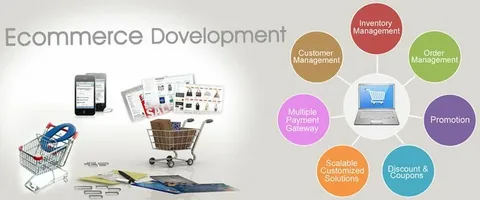
These solutions often include:
- Online storefronts
- Product catalogs
- Shopping carts
- Payment gateways
- Inventory management systems
- Order processing tools
- Customer management features
Together, these components create an environment where customers can browse, purchase, and interact with businesses digitally.
Modern e-commerce platforms often integrate with other business systems, helping organizations manage operations more efficiently while improving customer experiences.
Why E-commerce Has Become Essential
Consumer expectations continue to evolve.
Many customers now expect businesses to offer convenient digital purchasing options.
They want the ability to:
- Browse products online
- Compare options quickly
- Make purchases at any time
- Access information instantly
- Shop from mobile devices
- Track orders easily
Businesses that fail to meet these expectations may struggle to remain competitive.
E-commerce helps organizations adapt to changing customer behavior while expanding opportunities for growth.
Expanding Market Reach Beyond Physical Locations
One of the most significant advantages of e-commerce is the ability to reach customers beyond geographical limitations.
Traditional stores often depend on foot traffic or customers within a specific service area.
An e-commerce platform allows businesses to connect with audiences across:
- Cities
- Regions
- Countries
- International markets
This broader reach creates opportunities to attract new customers and increase sales without opening additional physical locations.
For many businesses, online commerce becomes a scalable way to enter new markets.
Supporting 24/7 Sales Opportunities
Physical stores typically operate within defined business hours.
An e-commerce store remains available around the clock.
Customers can:
- Browse products
- Place orders
- Review information
- Complete purchases
at any time.
This accessibility creates opportunities to generate sales even when staff are unavailable.
For businesses serving customers across different time zones, continuous availability can be particularly valuable.
Improving Customer Convenience
Convenience is one of the primary reasons consumers choose online shopping.
E-commerce solutions simplify many aspects of the buying process.
Customers can:
- Shop from home
- Compare products easily
- Access detailed information
- Complete transactions quickly
- Avoid travel time
When businesses reduce friction during the purchasing journey, customers are often more likely to complete transactions.
Improved convenience contributes to stronger customer experiences and higher satisfaction levels.
Enhancing Customer Experience
Customer experience plays a critical role in business growth.
Modern e-commerce solutions offer features that improve usability and personalization.
Examples include:
- Product recommendations
- Advanced search functionality
- User-friendly navigation
- Personalized content
- Order tracking
- Customer accounts
These features help customers find what they need more efficiently and create smoother shopping experiences.
Positive experiences often increase customer retention and encourage repeat purchases.
Supporting Mobile Commerce Growth
Mobile shopping has become a major component of e-commerce.
Consumers frequently browse products and make purchases through smartphones and tablets.
As a result, mobile optimization has become a necessity rather than an optional feature.
Effective e-commerce solutions support:
- Responsive design
- Mobile-friendly navigation
- Fast loading speeds
- Secure mobile payments
Businesses that provide seamless mobile experiences are often better positioned to serve modern consumers.
Increasing Sales Opportunities
An e-commerce platform can create multiple opportunities to increase revenue.
Examples include:
Cross-Selling
Suggesting complementary products.
Upselling
Highlighting premium alternatives.
Personalized Recommendations
Displaying products based on customer behavior.
Promotional Campaigns
Offering targeted discounts and special offers.
These features help businesses maximize the value of customer interactions while improving shopping experiences.
Supporting Data-Driven Decision Making
One advantage of digital commerce is access to detailed customer and sales data.
Businesses can analyze:
- Purchasing behavior
- Product performance
- Customer preferences
- Traffic sources
- Conversion trends
These insights help organizations make informed decisions about:
- Inventory management
- Marketing strategies
- Product development
- Customer engagement
Data-driven decision-making often leads to more effective business strategies.
Improving Operational Efficiency
E-commerce solutions can automate many routine processes.
Automation may include:
- Inventory updates
- Order confirmations
- Payment processing
- Shipping notifications
- Customer communications
Reducing manual work helps businesses improve efficiency while minimizing errors.
Operational improvements can free resources for growth-focused activities.
Strengthening Digital Marketing Efforts
E-commerce and digital marketing often work together.
An online store provides a destination for traffic generated through:
- Search engine optimization (SEO)
- Content marketing
- Social media marketing
- Email campaigns
- Paid advertising
When these channels operate together effectively, businesses can create more cohesive customer journeys.
E-commerce platforms often include tools that support marketing performance and customer engagement.
Building Customer Trust
Trust remains essential in online commerce.
Customers want confidence that their personal information and transactions are secure.
Modern e-commerce solutions support trust through features such as:
- Secure payment processing
- SSL certificates
- Transparent policies
- Customer reviews
- Order tracking
Trust-building elements help reduce purchase hesitation and encourage customer confidence.
Supporting Business Scalability
As businesses grow, operational requirements often become more complex.
Scalable e-commerce solutions can support:
- Expanded product catalogs
- Increased traffic volumes
- Higher transaction counts
- Multiple sales channels
- New market expansion
Businesses that choose scalable platforms may find it easier to adapt as their needs evolve.
Scalability helps support long-term growth without requiring complete system replacements.
Creating Competitive Advantages
Many industries now include businesses that offer digital purchasing options.
Organizations without effective e-commerce capabilities may struggle to compete against more accessible alternatives.
A strong e-commerce presence can help businesses:
- Improve customer accessibility
- Increase convenience
- Expand market reach
- Enhance customer experiences
These factors often contribute to stronger competitive positioning.
Common E-commerce Mistakes Businesses Make
Despite the opportunities e-commerce provides, some businesses encounter challenges due to poor implementation.
Prioritizing Features Over User Experience
Complex functionality should not come at the expense of usability.
Ignoring Mobile Optimization
Mobile users expect seamless shopping experiences.
Complicated Checkout Processes
Long or confusing checkout journeys often increase cart abandonment.
Poor Product Information
Customers need accurate descriptions, images, and details.
Neglecting Website Performance
Slow-loading pages can negatively impact conversions and customer satisfaction.
Avoiding these mistakes can improve overall e-commerce effectiveness.
What Businesses Can Realistically Expect From E-commerce Solutions
E-commerce solutions can support meaningful business growth, but success requires more than technology alone.
Businesses may experience:
- Increased sales opportunities
- Expanded customer reach
- Better customer experiences
- Improved operational efficiency
- Greater business scalability
- Enhanced marketing performance
The most successful organizations combine technology with strong customer experiences, effective marketing, and ongoing optimization.
Frequently Asked Questions
Q:1 What are e-commerce solutions?
A: E-commerce solutions are systems and technologies that enable businesses to sell products or services online and manage digital transactions.
Q:2 How do e-commerce solutions support business growth?
A: They help businesses reach larger audiences, improve customer convenience, increase sales opportunities, and streamline operations.
Q:3 Why is mobile optimization important for e-commerce?
A: Many consumers shop using mobile devices, making mobile usability essential for customer satisfaction and conversions.
Q:4 Can small businesses benefit from e-commerce?
A: Yes. Businesses of all sizes can use e-commerce to expand their reach and create additional revenue opportunities.
Q:5 How does e-commerce improve customer experience?
A: Features such as personalized recommendations, easy navigation, secure payments, and order tracking help create smoother shopping experiences.
Conclusion
E-commerce solutions have become an important driver of business growth in the digital era. By expanding market reach, improving customer convenience, supporting data-driven decisions, and creating scalable sales opportunities, online commerce helps businesses adapt to changing consumer expectations.
While technology alone does not guarantee success, organizations that combine effective e-commerce solutions with strong customer experiences and strategic marketing efforts are often better positioned for long-term growth. As digital commerce continues to evolve, businesses that invest in user-friendly, scalable, and customer-focused e-commerce experiences will likely remain more competitive in an increasingly connected marketplace.