



















You have great products. You have real customers waiting to buy them. But if your online store looks outdated, loads slowly, or confuses visitors the moment they land on it, you are losing sales every single day without even knowing it. That is exactly why ecommerce website design services is one of the most important decisions any business owner can make in 2026. A well-designed online store does not just look good. It guides visitors straight to the checkout button and keeps them coming back.
Whether you are a small business owner in Chicago, a growing brand in Los Angeles, or a startup launching across Texas, this guide covers everything you need to know about building an online store that converts in today’s competitive digital market.
What Is Ecommerce Website Design and Why Does It Matter in 2026?
Shopify website design services is the process of planning, building, and optimizing an online store so customers can easily browse products, trust the brand, and complete purchases without friction.
But here is what most people get wrong. They think design is only about colors and fonts. In reality, great ecommerce store design in 2026 is about the entire shopping experience. From the moment a visitor lands on your homepage to the second they receive their order confirmation email, every single step matters.
Studies consistently show that 94% of first impressions are design-related. If your online store looks untrustworthy or is hard to navigate, visitors leave within seconds and go buy from a competitor. With online shopping more competitive than ever in 2026, you simply cannot afford to make that mistake.
A professional ecommerce website design solves this problem by combining visual appeal with smart structure, fast performance, and a seamless path to purchase.
Internal Link Opportunity 1: Link to your Web Development Services page here. For example: “Need a complete online store built from scratch? Explore our ecommerce website design and development services.”
Key Elements of a High-Converting Ecommerce Website Design in 2026
Not all online stores are created equal. The difference between a store that generates consistent revenue and one that sits empty comes down to a handful of critical design decisions.
1. Clean, Mobile-First Layout
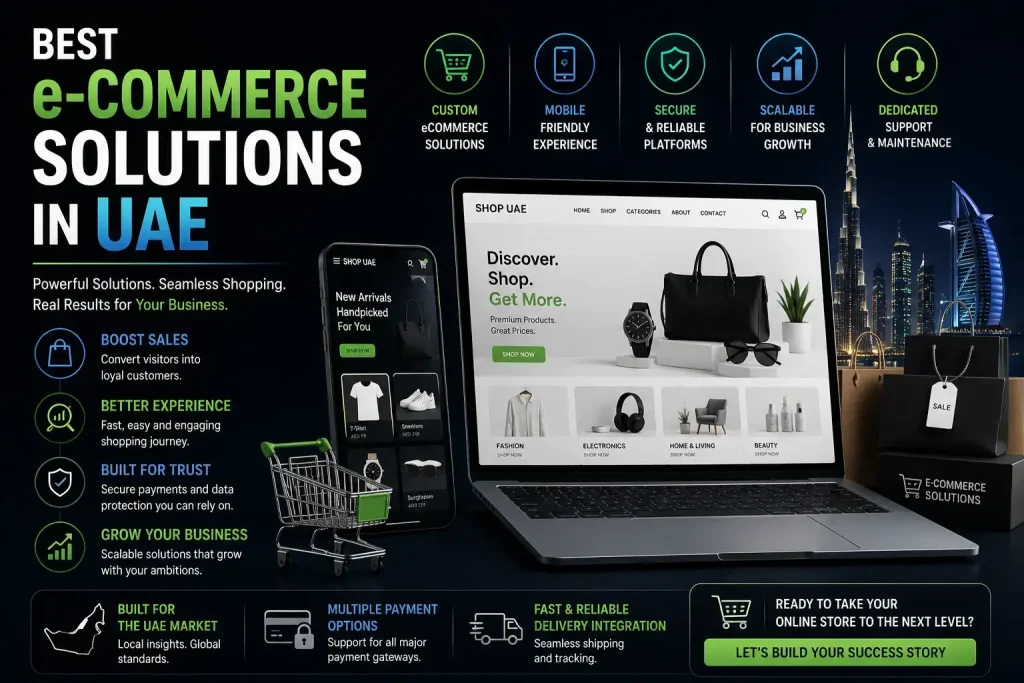
In 2026, mobile commerce makes up the majority of all online shopping worldwide. A mobile-friendly ecommerce design is not optional anymore. It is the baseline expectation every customer brings to your store. Your site needs to look perfect and function flawlessly on every screen size, from a small smartphone to a large desktop monitor.
Responsive ecommerce design automatically adjusts your layout, images, and buttons based on the device being used. If your store is not fully responsive, you are already losing a massive chunk of potential customers in cities like New York, Los Angeles, and Chicago where mobile shopping completely dominates.
2. Fast Loading Speed
Every extra second your store takes to load costs you real money. In 2026, customers expect near-instant page loads. A one-second delay can reduce conversions by up to 7%. A fast loading ecommerce site is not just a performance metric. It directly determines how much revenue your store generates every single day.
Page speed also plays a major role in your Google rankings. A slow site gets pushed down in search results, meaning fewer people find you in the first place.
3. Intuitive Product Page Design
Your product page design is where buying decisions are made. Each product page needs clear, high-quality images, a compelling description, visible pricing, stock availability, and a prominent “Add to Cart” button that is impossible to miss.
In 2026, customers also expect social proof on product pages. Reviews, ratings, user-generated photos, and quick delivery estimates all reduce hesitation and push buyers toward checkout.
4. Secure Payment Gateway Integration
Trust is everything in ecommerce. Customers will not hand over their payment details to a site that looks even slightly unreliable. Proper secure payment gateway integration with trusted providers like Stripe, PayPal, Apple Pay, and Google Pay not only protects your customers but also signals clearly that your store is safe to buy from.
Display security badges, SSL certificates, and accepted payment logos throughout the checkout process to reinforce confidence at every step.
5. Ecommerce UI/UX Design
UI and UX design, or user experience design, focuses on how easy and enjoyable it is to use your store. In 2026, this includes your navigation structure, smart search functionality, filter options, one-click checkout capabilities, and even how error messages appear when something goes wrong.
A great user-friendly online store removes every possible point of frustration between a visitor and a completed purchase. The fewer clicks it takes to buy, the more you sell.
Shopify vs WooCommerce: Which Platform Wins in 2026?
One of the first decisions in website design and development is choosing the right platform. Two options continue to lead the market for small and mid-size businesses in 2026.
Shopify website design remains the top choice for businesses that want a fast, reliable, and fully hosted solution. You do not need to worry about servers, security updates, or technical maintenance. Shopify handles it all. In 2026, Shopify has also expanded its AI-powered tools for product descriptions, analytics, and inventory management, making it even more powerful for growing brands.
WooCommerce design built on WordPress gives you deeper flexibility and control over every aspect of your store. It works best for businesses that already have a WordPress foundation or need highly specific customization. It requires more technical oversight but remains an extremely powerful platform for businesses that want full ownership of their online store development.
A qualified shopify web design agency in 2026 will assess your specific needs, growth goals, and technical capabilities before recommending the platform that gives you the strongest foundation.
Internal Link Opportunity 2: Link to your Platform-Specific Design page here. For example: “Not sure which platform fits your business? Read our 2026 comparison of Shopify website design vs WooCommerce design.”
Why Custom Ecommerce Website Design Still Outperforms Templates in 2026
Templates are tempting. They are cheap, fast, and easy to set up. But the hidden cost of going the template route becomes very clear very quickly.
Custom shopify website design is built specifically around your brand, your products, and your target customers. It gives you a unique visual identity that no competitor can replicate. It is optimized for your specific conversion rate optimization goals. And it scales with your business as your catalog, traffic, and revenue grow.
In 2026, template-based stores face an additional challenge. With millions of online stores competing for the same customers, looking generic is a serious disadvantage. Customers are more design-savvy than ever before and can immediately sense when a store feels low-effort or untrustworthy.
Strong ecommerce branding backed by a custom design is what turns first-time buyers into loyal repeat customers. This applies whether you are running a small business ecommerce website design project in Birmingham, Alabama or scaling a high-volume operation in Chicago or New York.
Conversion Rate Optimization: Turning Visitors Into Buyers in 2026
Getting traffic to your store is only half the battle. The other half is converting that traffic into actual sales. This is where conversion rate optimization makes all the difference.
In 2026, CRO in ecommerce focuses on using data, behavior analytics, and smart design to identify exactly where visitors drop off and fix those gaps. Common areas that drive major improvements include:
- Checkout process length. A streamlined, minimal checkout can significantly increase online sales. One-click purchasing and saved payment methods are now standard customer expectations.
- Call-to-action clarity. Your “Buy Now” and “Add to Cart” buttons should stand out visually and use direct, action-driven language.
- Trust signals. Customer reviews, return policies, delivery guarantees, and security badges all reduce purchase hesitation in a meaningful way.
- Personalization. In 2026, smart product recommendations and personalized browsing experiences based on behavior drive significantly higher average order values.
A great ecommerce web design agency will build CRO thinking directly into your store’s design from day one rather than trying to layer it on afterward.
Ecommerce Website Redesign: When It Is Time to Upgrade in 2026
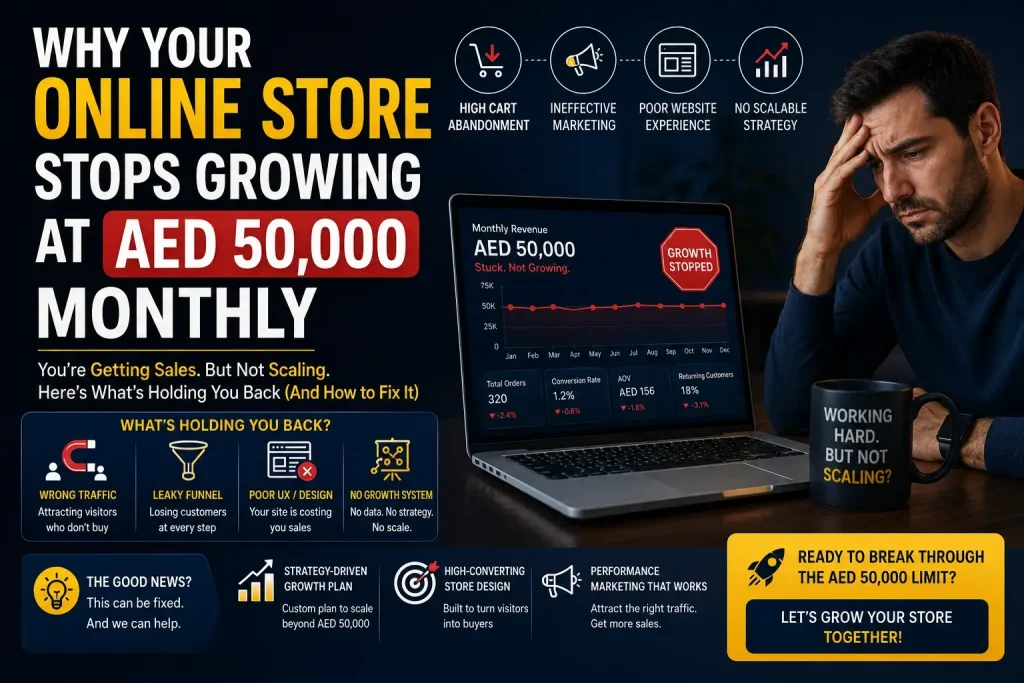
Already have an online store but not seeing the results you want? An ecommerce website redesign service could be the turning point your business needs.
Signs your store is overdue for a redesign in 2026 include:
- Your bounce rate is high and visitors leave without engaging
- Your store looks dated compared to where your competitors are today
- Mobile users struggle to navigate or complete purchases smoothly
- Your checkout abandonment rate sits above 70%
- Your store no longer reflects your current brand identity or product range
Businesses in competitive markets like Los Angeles, Texas, and Illinois consistently find that a strategic redesign dramatically improves both the online shopping experience and overall monthly revenue. One Chicago-based apparel brand saw a 45% jump in completed purchases within 90 days of launching a redesigned store with improved mobile UX and a simplified checkout built around 2026 buyer expectations. “A great store design works even better with consistent organic traffic. See how our SEO services help ecommerce brands dominate Google in 2026.”
How Much Does Ecommerce Website Design Cost in 2026?
Affordable ecommerce website design options exist at every budget level. Here is a realistic 2026 pricing breakdown:
- Template-based setup (DIY or entry-level agency): $500 to $2,500
- Small business custom design: $3,000 to $10,000
- Mid-size ecommerce store: $10,000 to $30,000
- Enterprise-level ecommerce: $30,000 and above
Pricing reflects the complexity of your product catalog, the level of customization, third-party integrations, and ongoing support. The smarter question is never just “how much does this cost?” It is “how much revenue will a better-designed store generate for my business over the next 12 months?”
Choosing the Best Ecommerce Website Design Company in 2026
Whether you need ecommerce website design Chicago specialists, a trusted team for ecommerce web design New York, or an agency experienced in ecommerce website design Texas markets, choosing the right partner makes all the difference.
Here is what to look for in the best ecommerce website design company in 2026:
- A strong, up-to-date portfolio of live ecommerce stores launched recently
- Deep experience with your preferred platform, whether Shopify or WooCommerce
- A proven process covering discovery, design, development, testing, and launch
- Post-launch support, performance monitoring, and ongoing optimization
- A genuine understanding of both design aesthetics and conversion rate optimization
A trusted agency offering ecommerce website design Birmingham services will always take time to understand your business goals before building a single page.
Frequently Ask Question
Q1: Why is professional ecommerce website design important for businesses in the USA?
A: A professionally designed ecommerce website helps build trust, improve user experience, and increase conversions. In the competitive US market, customers expect fast, mobile-friendly, and visually appealing websites that make shopping easy and secure.
Q2: What features should a high-quality ecommerce website include?
A: A strong ecommerce site should include responsive design, secure payment gateways, easy navigation, fast loading speeds, product filtering, SEO optimization, and integration with tools like inventory and CRM systems.
Q3: How much does ecommerce website design cost in the USA?
A: The cost can vary widely depending on complexity. Basic ecommerce websites may start around $2,000–$5,000, while custom-designed, feature-rich platforms can range from $10,000 to $50,000 or more.
Q4: How long does it take to design an ecommerce website?
A: The timeline typically ranges from 4 to 12 weeks, depending on the project scope, number of products, custom features, and revisions required.
Q5: What platform is best for ecommerce website design in the USA?
A: Popular platforms include Shopify, WooCommerce, Magento, and BigCommerce. The best choice depends on your business size, budget, scalability needs, and customization requirements.
Ready to Build an Online Store That Sells in 2026?
Your competitors are investing in professional ecommerce website design right now. Every day your store underperforms is revenue going somewhere else.
Whether you need a brand-new custom ecommerce website design, a full ecommerce website redesign service, or expert guidance on the best platform for your business goals in 2026, we are ready to help.
Contact us today for a free ecommerce consultation. We will review your current store or business goals and build a clear plan to help you sell products online and increase online sales with a store designed to convert today’s buyers.
C Zone Star No pressure, just a clear and honest roadmap built for 2026 and beyond.